
One Dirty Coil Can Destroy Your Entire System
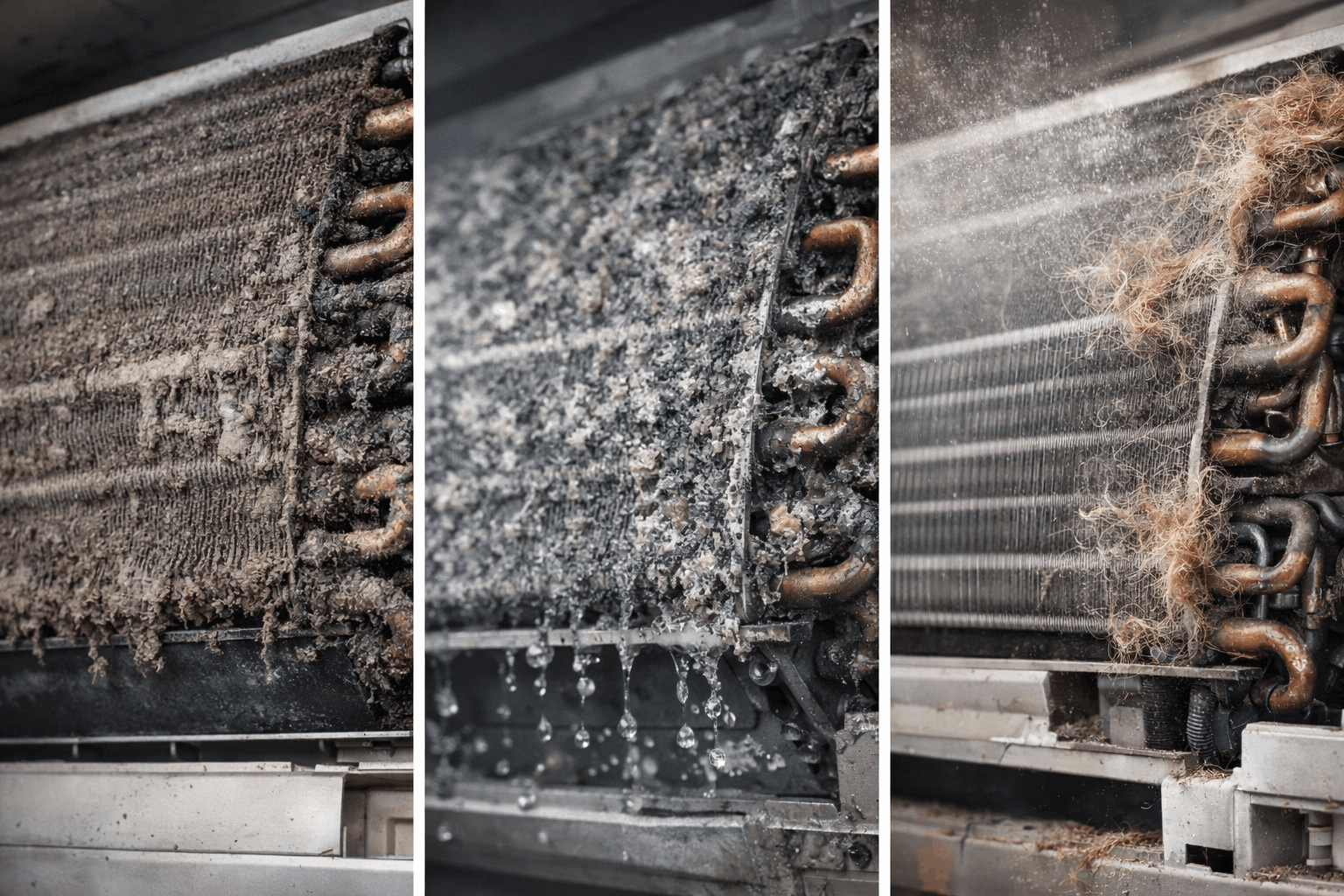
Most air-conditioning failures don’t happen overnight. They build up quietly, slowly, and expensively. One of the most underestimated causes? A dirty evaporator coil. It may sound minor, but in reality, a single neglected coil can shorten your system’s lifespan, inflate your electricity bills, and even destroy your compressor.
This is not an exaggeration — it’s a daily reality we see on site.
What Is an Evaporator Coil and Why Does It Matter?
The evaporator coil is the heart of your air-conditioning system. Its job is simple but critical: absorb heat from indoor air so cool air can circulate back into your space. When air passes over the coil, heat is removed, moisture condenses, and comfort is delivered.
But this process only works if the coil is clean.
Over time, dust, grease, construction debris, pet hair, and even airborne oil particles stick to the coil fins. In humid environments like Singapore, mold and bacteria thrive on these dirty surfaces. Once that happens, heat transfer efficiency drops dramatically.
The Silent Damage of a Dirty Coil
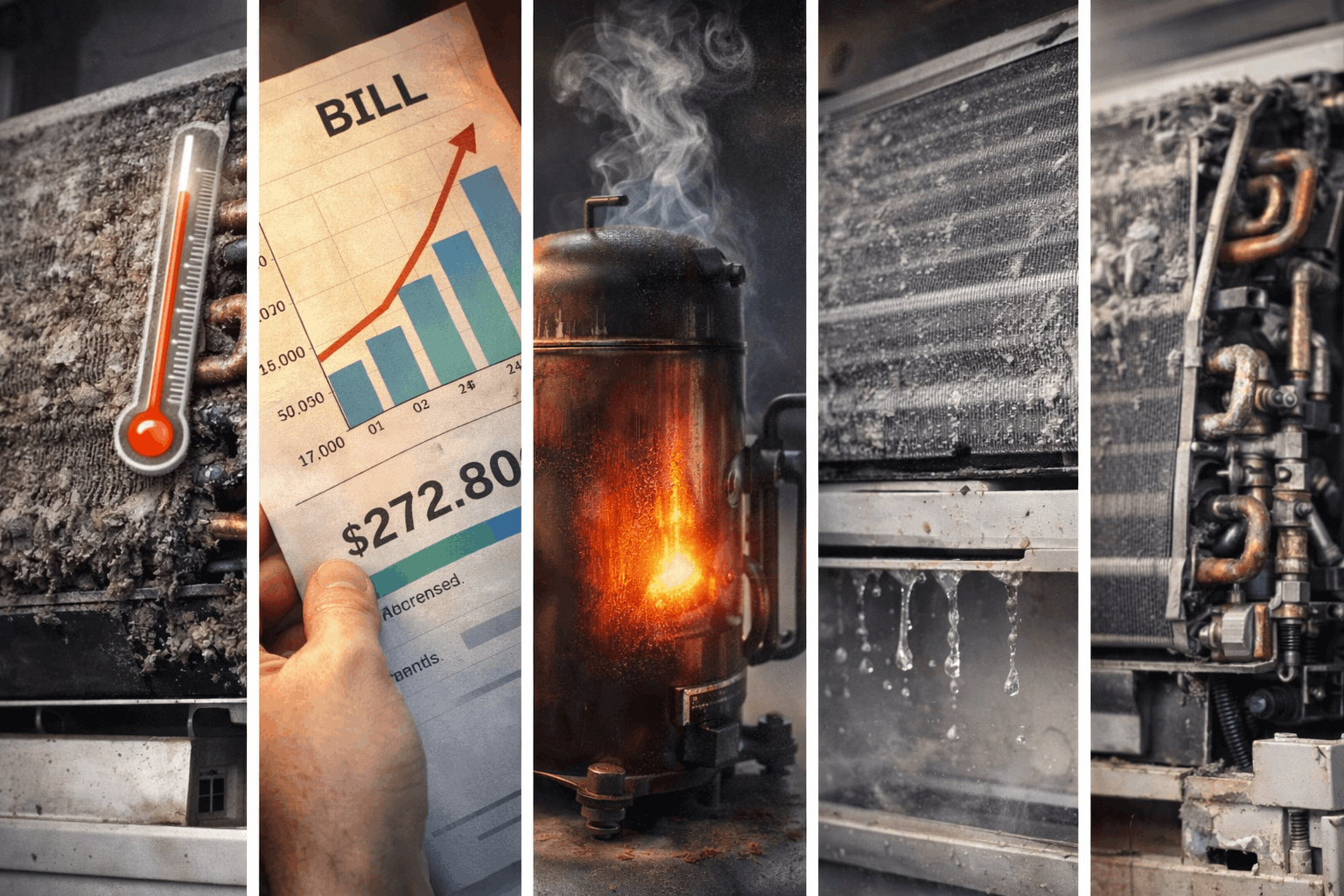
A dirty coil doesn’t announce itself loudly. It doesn’t flash warning lights. Instead, it causes a chain reaction of damage that many users only notice when repair costs become painful.
Here’s what really happens behind the scenes:
- Cooling Performance Drops
When the coil is coated in dirt, it can no longer absorb heat efficiently. Your air-conditioner still runs, but the air feels less cool. Many people assume the unit is “old” or “weak,” when the real issue is poor heat exchange.
- Electricity Bills Go Up
Because cooling efficiency is reduced, the system runs longer to achieve the same temperature. Longer runtime means higher power consumption — and a noticeably higher electricity bill.
- Compressor Overload Begins
The compressor is the most expensive component in any AC system. When the evaporator coil cannot absorb heat properly, refrigerant returns to the compressor at higher temperatures. This forces the compressor to work harder, run hotter, and wear out faster.
Many compressor failures we attend to started months earlier with a dirty coil.
- Water Leakage Starts
A clean coil allows condensation to flow smoothly into the drain pan and out through the drainage pipe. A dirty coil disrupts airflow and temperature balance, causing ice formation on the coil. When that ice melts, excess water overflows the drain pan — leading to ceiling stains, dripping indoor units, and complaints from occupants.
- System Lifespan Drops Sharply
Every component in the AC system depends on balanced operation. Once a dirty coil pushes the system out of balance, motors, fans, expansion valves, and compressors all suffer. What should be a 10–15 year system may fail in half the time.
Why “Gas Top-Up” Is Not the Solution
One of the biggest misconceptions in air-conditioning maintenance is assuming weak cooling means low gas. In many cases, refrigerant levels are perfectly normal — the real problem is restricted heat transfer due to dirty coils.
Topping up gas without cleaning the coil:
- Does not restore efficiency
- Increases operating pressure
- Accelerates compressor damage
This is why professional diagnosis always starts with physical inspection and cleaning, not gas charging.
Health and Hygiene Risks You Shouldn’t Ignore
A dirty evaporator coil is also a health issue.
Moist, dusty coils are breeding grounds for:
- Mold spores
- Bacteria
- Fungi
These contaminants are blown directly into your living or working space. Common symptoms include:
- Musty or sour smells
- Eye and throat irritation
- Worsening allergies
- Headaches and fatigue
In offices, this leads to productivity loss. In homes, it affects children, elderly occupants, and anyone with respiratory sensitivity.
Regular Coil Cleaning: What It Actually Achieves
Proper evaporator coil cleaning is not cosmetic — it is functional maintenance.
When coils are professionally cleaned:
- Heat transfer efficiency is restored
- Cooling becomes faster and more stable
- Power consumption drops
- Drainage issues disappear
- Compressor stress is reduced
- Indoor air quality improves
In short, the system returns to how it was designed to operate.
How Often Should Coil Cleaning Be Done?
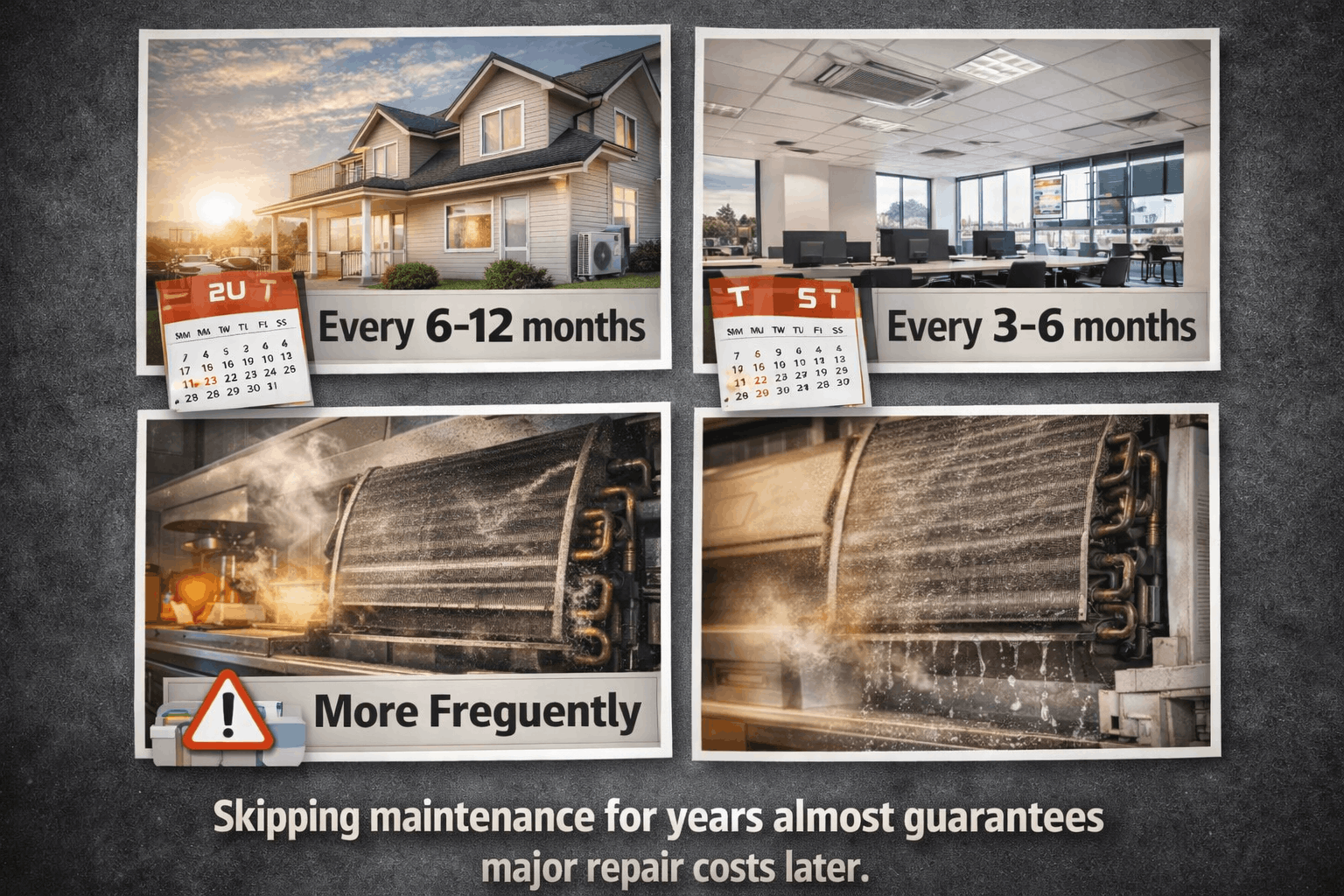
There is no one-size-fits-all answer, but general guidelines apply:
- Residential homes: Every 6–12 months
- Offices & commercial units: Every 3–6 months
- Kitchens, workshops, high-dust areas: More frequently, based on inspection
Skipping maintenance for years almost guarantees major repair costs later.
The Cost Comparison That Matters
Let’s be practical.
- Preventive coil cleaning: Low cost, planned, controlled
- Compressor replacement: High cost, downtime, disruption
- Water damage repair: Hidden costs, reinstatement, complaints
Preventive maintenance is always cheaper than emergency repairs. Always.
Final Warning: Don’t Wait for Failure
Most people only act when the air-conditioner stops working completely. By then, the damage is already done.
A dirty coil is not a small issue.
It is the starting point of:
- High bills
- Poor comfort
- Water leaks
- Compressor failure
If your system hasn’t been properly serviced, inspected, and cleaned, it is already at risk.
Need Professional Coil Cleaning or ACMV Maintenance?
Alpha & Omega Trinity Pte Ltd
Professional ACMV, Plumbing & MEP Specialists
📞 Call / WhatsApp: +65 8151 8857
🌐 www.aotrinitysg.com.com
Don’t wait until your system fails.
One dirty coil really can destroy your entire system — no joke.


