
This Shower Leak Can Damage Your Entire Bathroom Wall
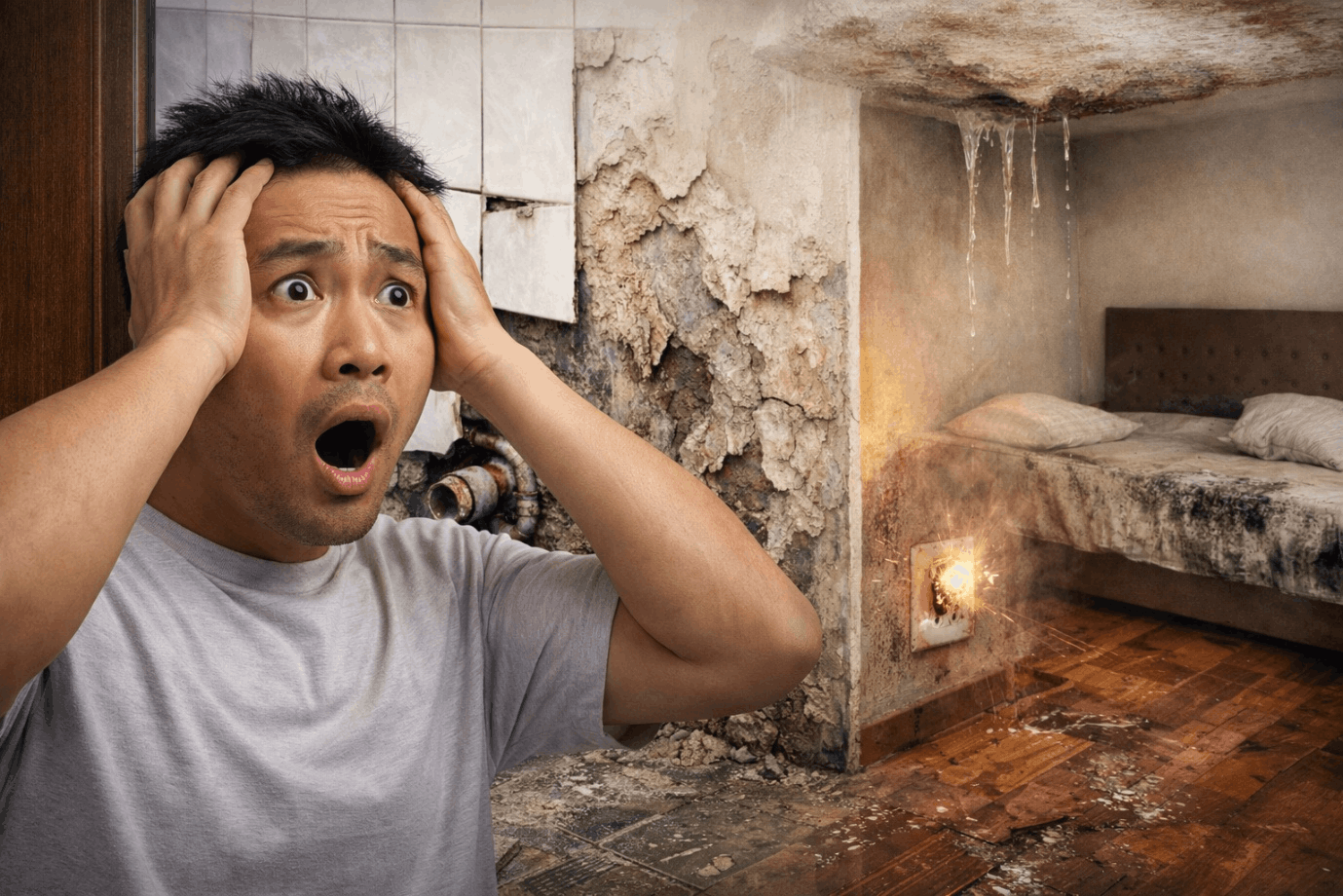
A small shower leak may look harmless at first.
Maybe you notice a faint damp patch outside the bathroom.
Maybe the paint near the door starts bubbling slightly.
Maybe there’s a mild musty smell that comes and goes.
Most homeowners ignore these early signs.
But what many don’t realize is this:
A shower leak is rarely “small.”
Behind your tiles, water may already be spreading silently — soaking into plaster, weakening structures, and damaging adjacent rooms. By the time visible damage appears, the internal destruction may already be serious.
Let’s understand why this happens — and why early action is critical.
How Shower Leaks Start
A typical shower area has multiple protective layers:
- Tiles
- Tile adhesive
- Screed layer
- Waterproofing membrane
- Structural wall or slab
When everything is installed properly, water drains away safely.
But once one layer fails, water begins to travel where it shouldn’t.
Common starting points include:
- Cracked grout lines
- Failed waterproofing membrane
- Poor sealing around shower mixer
- Loose shower screen joints
- Concealed pipe leakage inside wall
Water does not stay in one place. It follows gravity and capillary action, moving sideways and downward into surrounding materials.
What Happens Behind the Wall
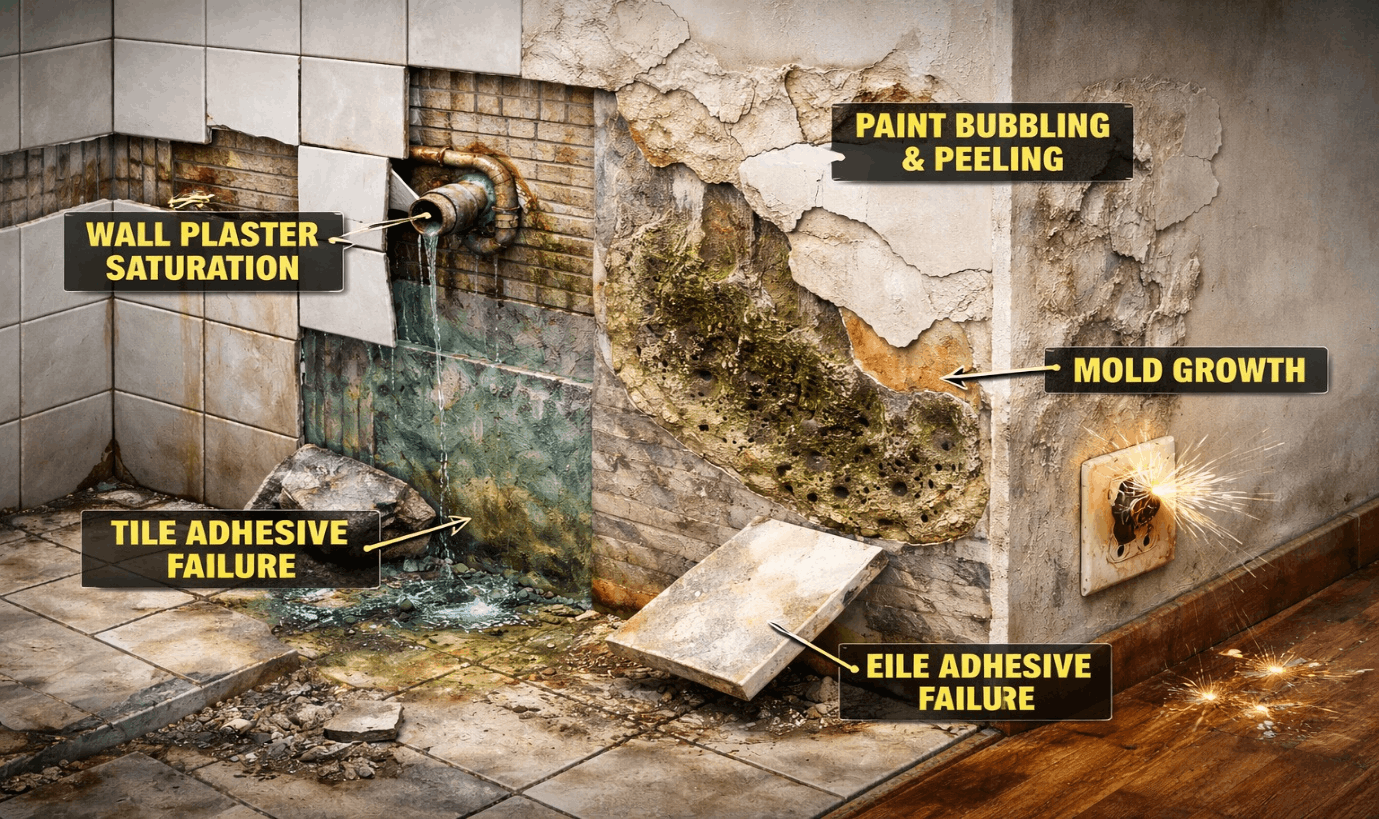
The biggest danger of a shower leak is hidden damage.
Water penetrates through grout gaps and reaches the cement screed. From there, it spreads across the waterproofing layer. If the membrane has deteriorated or was poorly applied, moisture enters the wall structure.
Over time, this leads to:
- Wall Plaster Saturation
Plaster absorbs water like a sponge. Once saturated, it weakens and begins to crumble internally.
- Paint Bubbling and Peeling
Moisture pushes paint away from the surface, causing bubbles and flaking.
- Tile Adhesive Failure
Constant moisture breaks down adhesive bonding. Tiles start sounding hollow — then loosen.
- Mold Growth
Dark, damp conditions create perfect environments for mold and fungus. This affects air quality and can trigger allergies.
- Electrical Risk
In some layouts, electrical points or conduits are located behind bathroom walls. Water intrusion increases risk of short circuit or corrosion.
The Damage Doesn’t Stay Inside the Bathroom
One of the most expensive consequences is water spreading beyond the shower area.
Water can travel into:
- Adjacent bedroom walls
- Living room partitions
- Built-in wardrobes
- Ceiling of the unit below
- Skirting boards and flooring
In apartments, this often leads to neighbour complaints. Ceiling water stains in the lower unit are common signs of long-term shower leakage above.
Once that happens, repairs become more complicated — and sometimes involve multiple units.
Early Warning Signs You Should Never Ignore
Most serious bathroom repairs could have been avoided if action was taken early.
Watch out for:
- Peeling paint outside bathroom
- Damp patch along wall corner
- Swollen skirting
- Musty smell
- Cracked or missing grout
- Loose tiles
- Hollow sound when tapping tiles
If you notice even one of these signs, do not wait.
Leaks never fix themselves.
Why Waiting Makes It Worse
Many homeowners delay repair because:
“It’s just a small patch.”
“I’ll monitor first.”
“Maybe it will dry.”
Unfortunately, shower leaks are active problems. Every shower adds more moisture.
What starts as minor seepage can turn into:
- Full wall hacking
- Complete waterproofing replacement
- Tile reinstallation
- Ceiling reconstruction for lower unit
- Wardrobe replacement
- Electrical rectification
Repair costs can increase 3 to 5 times if ignored for months.
Waterproofing Failure – The Real Culprit
In many cases, the root cause is failed waterproofing.
Waterproofing membranes degrade over time due to:
- Poor workmanship
- Inadequate curing
- Movement cracks
- Ageing materials
- Structural movement
Once the membrane fails, the shower area no longer contains water effectively.
Surface tile repair alone will not solve the issue if the membrane beneath is compromised.
Proper rectification requires professional assessment.
Professional Leak Detection Matters
Not every shower leak requires full hacking immediately.
Professional plumbers use methods such as:
- Moisture meter testing
- Pressure testing for concealed pipes
- Water ponding tests
- Visual inspection of sealant and grout
- Infrared detection in advanced cases
Accurate diagnosis prevents unnecessary work and ensures correct solution.
Guesswork repairs often fail again because the root cause was never identified.
Common Repair Solutions
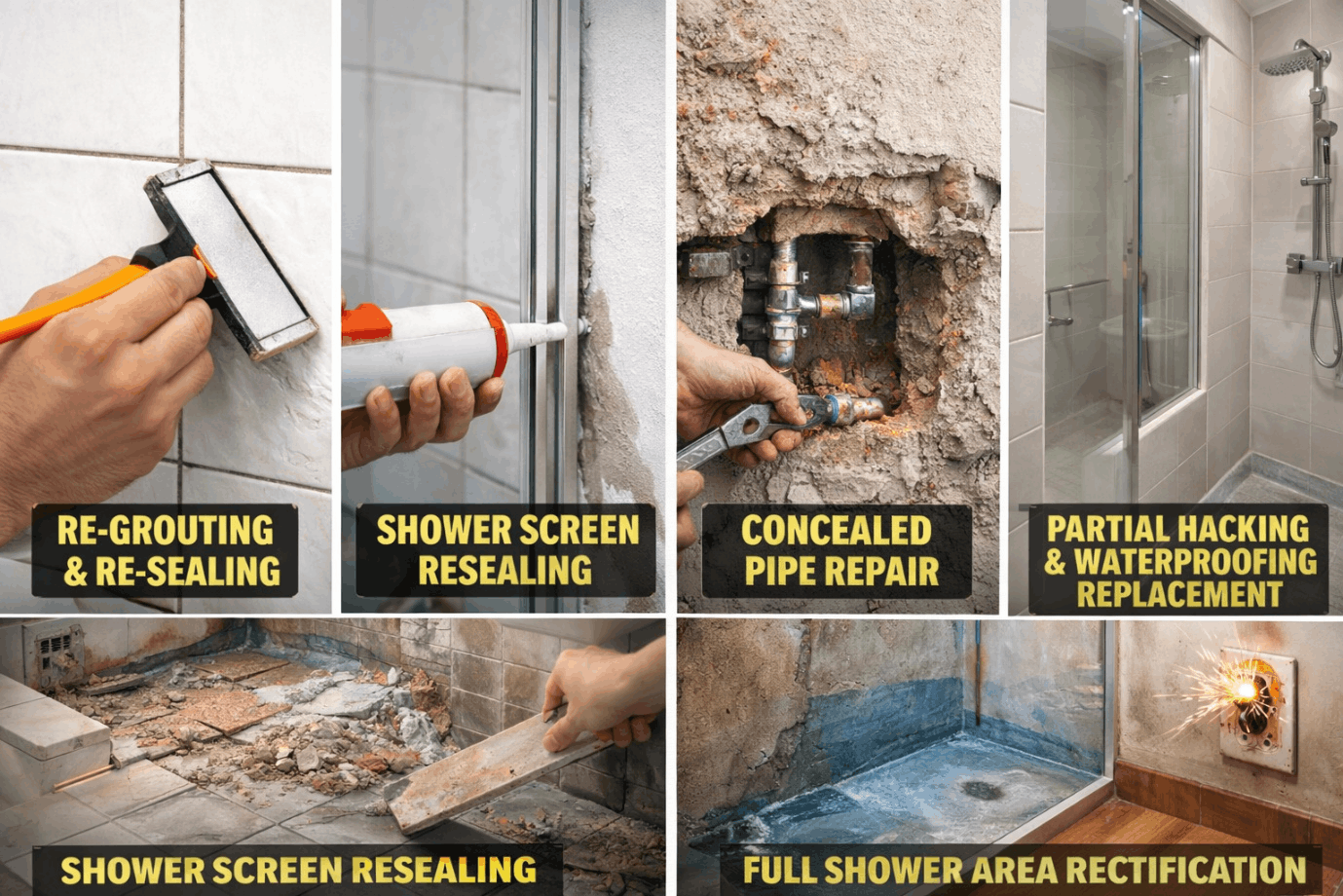
Depending on the cause, rectification may involve:
- Re-grouting and Re-sealing
For minor grout cracks without waterproofing failure.
- Shower Screen Resealing
If leakage occurs at glass joints.
- Concealed Pipe Repair
If internal plumbing joints are leaking.
- Partial Hacking & Waterproofing Replacement
If membrane failure is confirmed.
- Full Shower Area Rectification
For long-term or widespread damage.
The correct solution depends entirely on diagnosis.
Prevention Tips for Homeowners
You can reduce shower leak risks by:
- Checking grout condition yearly
- Replacing cracked sealant promptly
- Avoiding harsh chemicals that damage grout
- Ensuring proper slope toward floor trap
- Acting immediately at first sign of dampness
Preventive maintenance is always cheaper than structural repair.
The Hidden Cost of Ignoring It
Beyond physical damage, shower leaks also affect:
- Property value
- Tenant complaints
- Insurance claims
- Neighbour disputes
- Renovation budgets
In Singapore apartments especially, water seepage disputes between units can escalate quickly if not handled early.
What could have been a simple rectification may turn into a coordination issue between multiple homeowners and management.
Final Advice: Don’t Wait for Major Damage
A shower leak is not just a bathroom issue.
It is a structural issue.
It is a financial issue.
It is a health issue.
The earlier you act, the simpler the repair.
If you notice damp patches, hollow tiles, or peeling paint near your bathroom — treat it as a warning signal.
Because once water spreads behind your wall, repair becomes significantly more complex.
Small signs today can prevent big expenses tomorrow.
Don’t wait until hacking is unavoidable.
Act early. Protect your home.

🚿 Need Professional Inspection?
If you notice damp patches, peeling paint, or loose tiles — act early.
📞 Call / WhatsApp: +65 8151 8857
🌐 Website: www.aotrinitysg.com.com
Alpha & Omega Trinity Pte Ltd
Professional Plumbing & Water System Specialist in Singapore
Top of Form
Bottom of Form


