
This Shower Mixer Leak Means Your Hot/Cold Valve Is Damaged — And It’s More Serious Than You Think
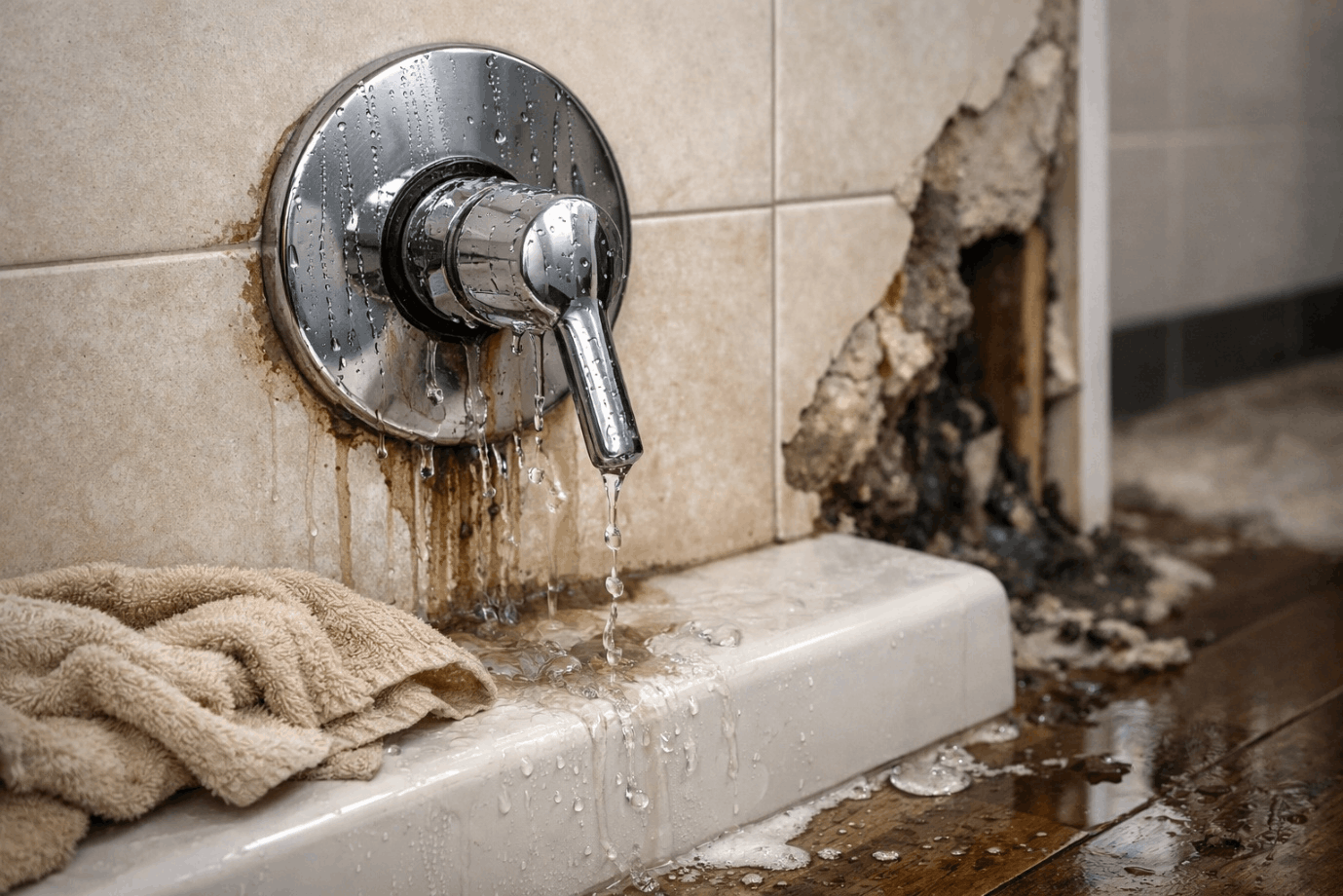
A leaking shower mixer is one of the most ignored plumbing problems in residential condos and commercial buildings. Many property owners assume it is “just a small drip.” Some even place a towel underneath and forget about it.
But in reality, when a shower mixer starts leaking from the handle or wall plate, it usually means one critical component inside has failed:
The hot/cold valve cartridge.
And if not fixed properly, the damage can extend far beyond the bathroom surface.
What Is Inside a Shower Mixer?
A shower mixer may look simple from the outside — just a handle and a chrome plate. But behind the wall, there is a precision component called a cartridge (valve core).
This cartridge:
- Controls hot and cold water mixing
- Regulates water pressure
- Seals the internal water pathways
- Maintains temperature balance
When this component wears out, cracks, or corrodes, water starts escaping internally.
Common Signs Your Mixer Valve Is Damaged
Many leaks begin subtly. Here are warning signs most people ignore:
- Water Dripping From the Handle
If water drips even when the mixer is off, the internal seal is no longer holding pressure.
- Water Seeping From the Wall Plate
This is more serious. It often means water is leaking inside the wall cavity.
- Unstable Water Temperature
Sudden hot-to-cold shifts indicate internal cartridge imbalance.
- Reduced Water Pressure
Internal wear can disturb normal flow control.
- Rust or Water Stains Around Tiles
A sign moisture has already been present for some time.
Why Shower Mixer Cartridges Fail
In Singapore buildings, we typically see failure after 5 to 8 years, depending on usage and water quality.
The main causes include:
🔧 Worn-Out Rubber Seals
Over time, rubber O-rings lose elasticity and crack.
💦 High Water Pressure
Excessive pressure stresses internal components.
🧱 Corrosion
Moisture + metal = corrosion. Internal brass parts can deteriorate.
🧪 Mineral Buildup
Hard water deposits damage the smooth movement of the cartridge.
⚙ Poor Installation
Incorrect torque, wrong cartridge model, or misalignment can shorten lifespan.
The Hidden Risk: Water Behind the Wall
The biggest danger is not the visible drip.
The real problem is what happens inside the wall cavity.
When water leaks internally:
- Wall partitions absorb moisture
- Tile adhesive weakens
- Grout starts cracking
- Mold begins growing
- Metal fittings corrode
By the time external damage appears, the internal structure may already be compromised.
In some condo units, we have seen minor mixer leaks lead to:
- Ceiling damage to the unit below
- Waterproofing membrane failure
- Major hacking and reinstatement works
What could have been a few hundred dollars repair becomes several thousand dollars renovation.
Why Silicone Sealing Is NOT a Solution
Some temporary fixes include:
- Applying silicone around the handle
- Tightening the external nut
- Ignoring the drip
These do not solve the root cause.
Silicone only traps water temporarily. It does not repair the damaged cartridge. In fact, it may hide the problem until it becomes worse.
A proper solution always involves internal inspection.
What a Professional Repair Should Include
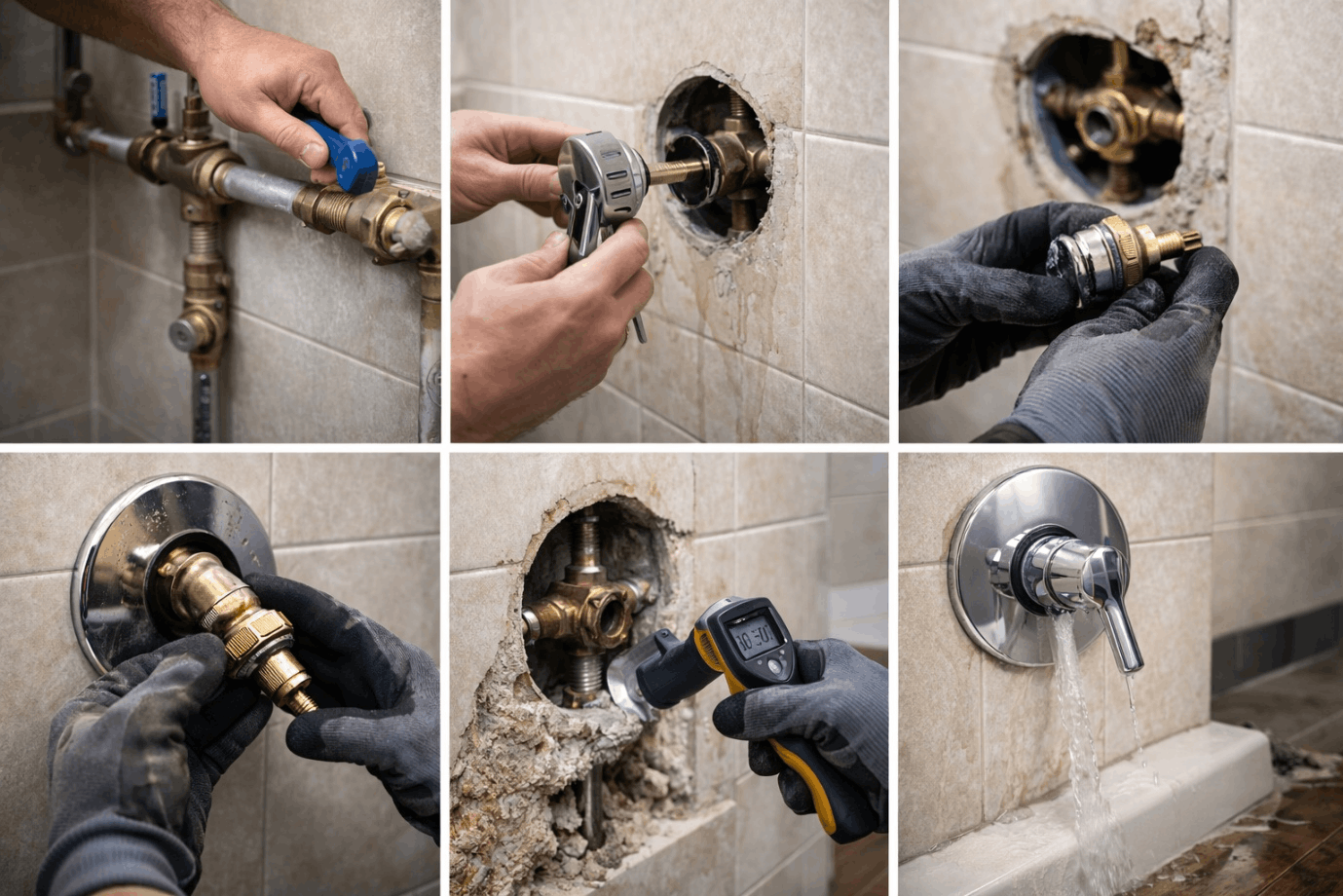
A real fix addresses the cause — not just the symptom.
✔ Step 1: Isolate Water Supply
Water must be shut off safely before dismantling.
✔ Step 2: Remove Handle and Cover Plate
Careful dismantling prevents tile damage.
✔ Step 3: Extract and Inspect Cartridge
Check for:
- Seal failure
- Cracks
- Corrosion
- Incorrect model type
✔ Step 4: Replace With Compatible Valve
Not all cartridges are universal. Matching brand and specification is critical.
✔ Step 5: Inspect Wall Connections
Check threaded fittings and internal integrity.
✔ Step 6: Pressure Testing
Turn on water and test under full pressure.
✔ Step 7: Temperature Balance Verification
Ensure proper hot/cold mixing performance.
Skipping any of these steps increases the risk of recurring leaks.
When Should You Replace the Entire Mixer?
Sometimes cartridge replacement is not enough.
Full mixer replacement is recommended if:
- The mixer body is corroded
- Internal threads are damaged
- Spare cartridge parts are no longer available
- There is repeated leakage history
Replacing early can prevent wall hacking later.
Cost Comparison: Early Fix vs Delayed Damage
Let’s compare realistically:
Early Stage (Cartridge Replacement)
- Cartridge cost
- Labour
- Basic testing
Approximate cost: manageable and controlled.
Late Stage (Wall Damage Repair)
- Hack tiles
- Waterproofing reinstatement
- Tile replacement
- Painting
- Ceiling repair (unit below)
Cost can multiply several times.
Preventive repair is always cheaper than restoration work.
Why Condo Owners Should Act Fast
In multi-storey buildings, water damage does not stay within your unit.
A leaking mixer can:
- Damage your neighbour’s ceiling
- Lead to MCST complaints
- Result in insurance claims
- Create disputes over liability
Prompt action protects both property and relationships.
How Often Should Shower Mixers Be Inspected?
We recommend:
- Visual inspection every 6 months
- Immediate check if dripping starts
- Full inspection during renovation
- Pressure check if temperature instability occurs
Simple awareness prevents major repair bills.
Final Advice: Don’t Ignore the “Small Drip”
Most major plumbing problems begin small.
A leaking shower mixer is not just a cosmetic issue. It is often a sign that the internal hot/cold valve has failed.
The longer it is ignored:
- The more moisture builds up
- The more damage spreads
- The more expensive the repair becomes
If you notice:
- Dripping from handle
- Water behind plate
- Unstable temperature
- Rust stains
Do not wait.
A proper inspection today can prevent serious wall damage tomorrow.

📞 Call / WhatsApp: +65 8151 8857
🌐 Website: www.aotrinitysg.com.com
Alpha & Omega Trinity Pte Ltd
Professional Plumbing & Water System Specialist in Singapore


