
Your Water Tank Could Be Leaking Into Your Neighbour’s Ceiling — A Hidden Condo Problem You Can’t Ignore
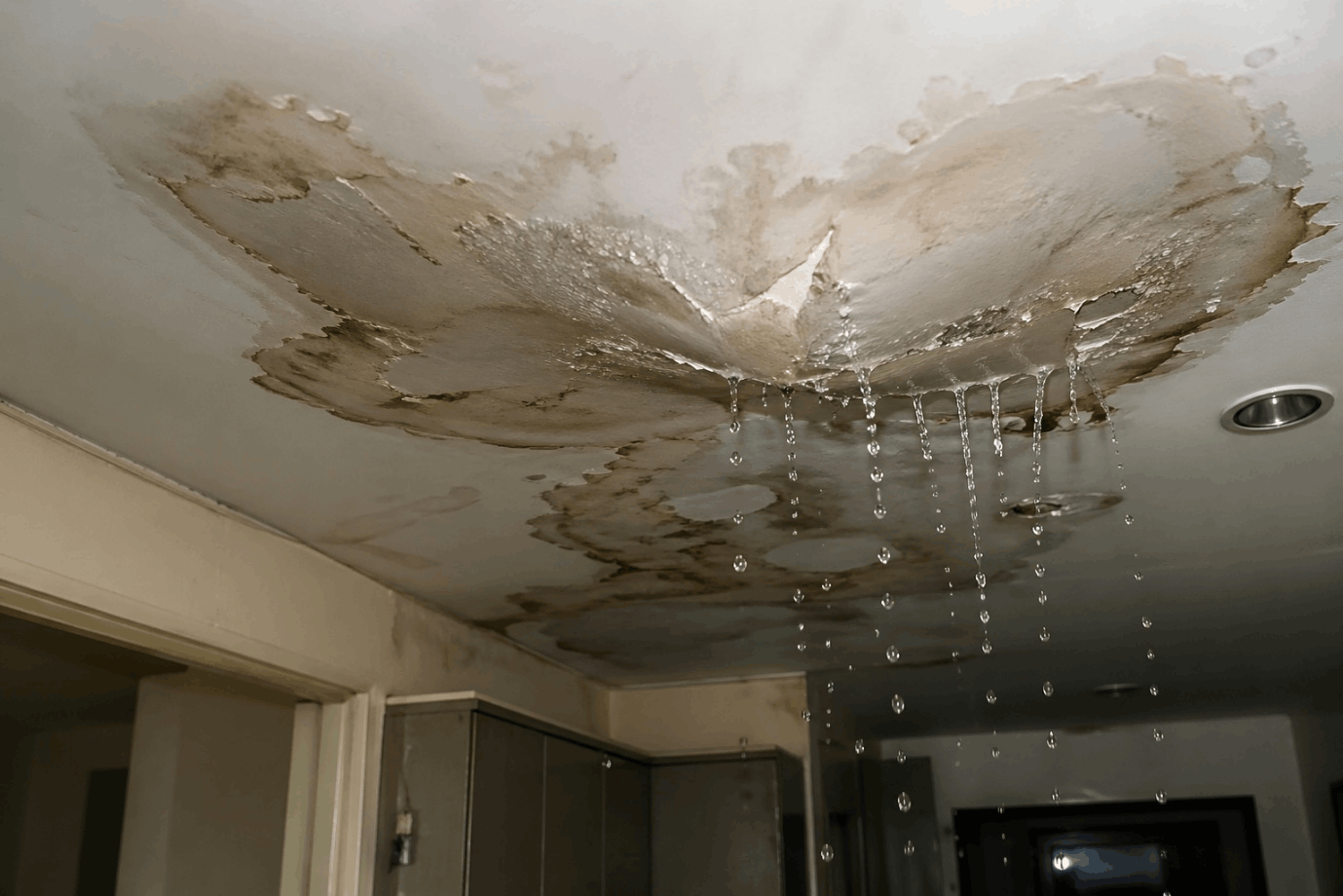
In high-rise living, especially in condominiums, one small issue inside your unit can quickly become a big problem for someone else. One of the most common yet overlooked problems is a leaking water tank. What makes this issue dangerous is not just the damage inside your unit—but the damage it silently causes to your neighbour’s ceiling below.
Many homeowners only realize the seriousness when complaints start coming in. By then, the damage is often already extensive.
💧 How Tank Leaks Affect Other Units
Unlike visible plumbing leaks, water tank leaks are usually hidden. They occur in areas that are not frequently inspected—such as service yards, rooftops, or concealed tank platforms.
When a tank starts leaking:
- Water seeps through the slab slowly
- It travels through concrete and structural layers
- Eventually, it reaches the ceiling of the unit below
This means your neighbour may see water stains, dripping, or even ceiling damage—while your unit appears completely normal.
⚠️ Common Signs You Should Never Ignore
Even though tank leaks are hidden, there are warning signs if you know where to look:
Inside Your Unit
- Constant water pump running
- Unusual increase in water bills
- Damp smell near tank area
- Water accumulation around tank base
From Neighbours Below
- Complaints about water stains
- Peeling paint or bubbling ceiling
- Water dripping from light fittings
- Musty odour in rooms
Ignoring these signs can turn a small leak into a major structural issue.
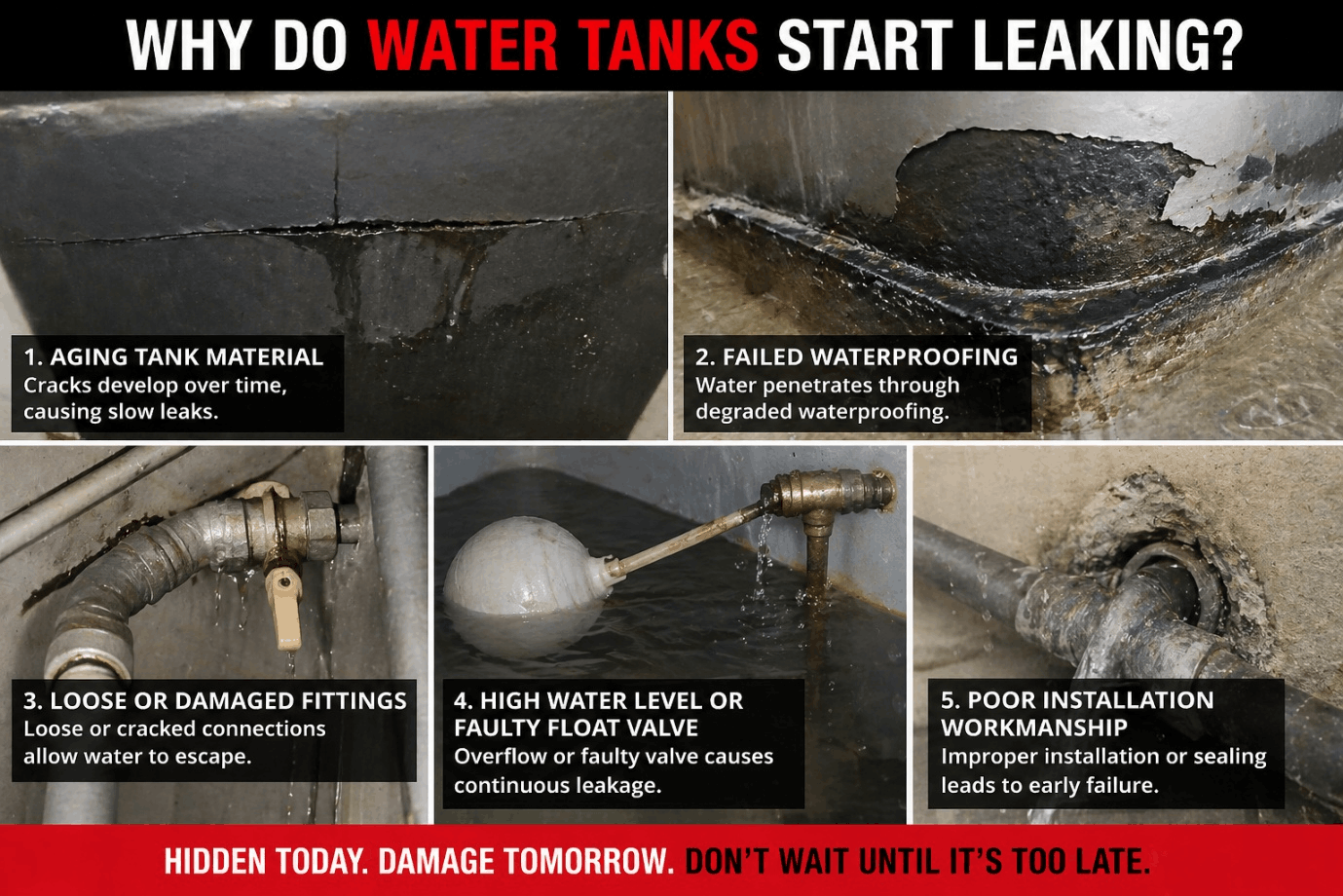
🔍 Why Do Water Tanks Start Leaking?
Understanding the root cause helps prevent future problems. The most common reasons include:
- Aging Tank Material
Over time, tank materials weaken due to constant water pressure, temperature changes, and environmental exposure. Small cracks can develop, leading to slow leaks.
- Failed Waterproofing
Waterproofing layers around the tank area can degrade. Once this barrier fails, water can penetrate into the concrete slab.
- Loose or Damaged Fittings
Connections such as inlet/outlet pipes, overflow pipes, and valves may loosen or crack, allowing water to escape.
- High Water Level or Faulty Float Valve
If the float valve is not functioning properly, water can overflow continuously, causing long-term leakage.
- Poor Installation Workmanship
Improper installation or lack of proper sealing can lead to early failure of the system.
💸 The Real Cost of Ignoring the Problem
Many property owners delay action because they don’t see immediate damage inside their unit. However, the consequences can be severe:
- Ceiling collapse risk in the unit below
- Electrical hazards if water reaches lighting or wiring
- Mold growth, affecting indoor air quality
- Expensive repair costs, including neighbour’s unit
- MCST complaints and disputes
- Possible legal liability for damages
In most cases, the cost of repairing damage in two units is significantly higher than fixing the leak early.
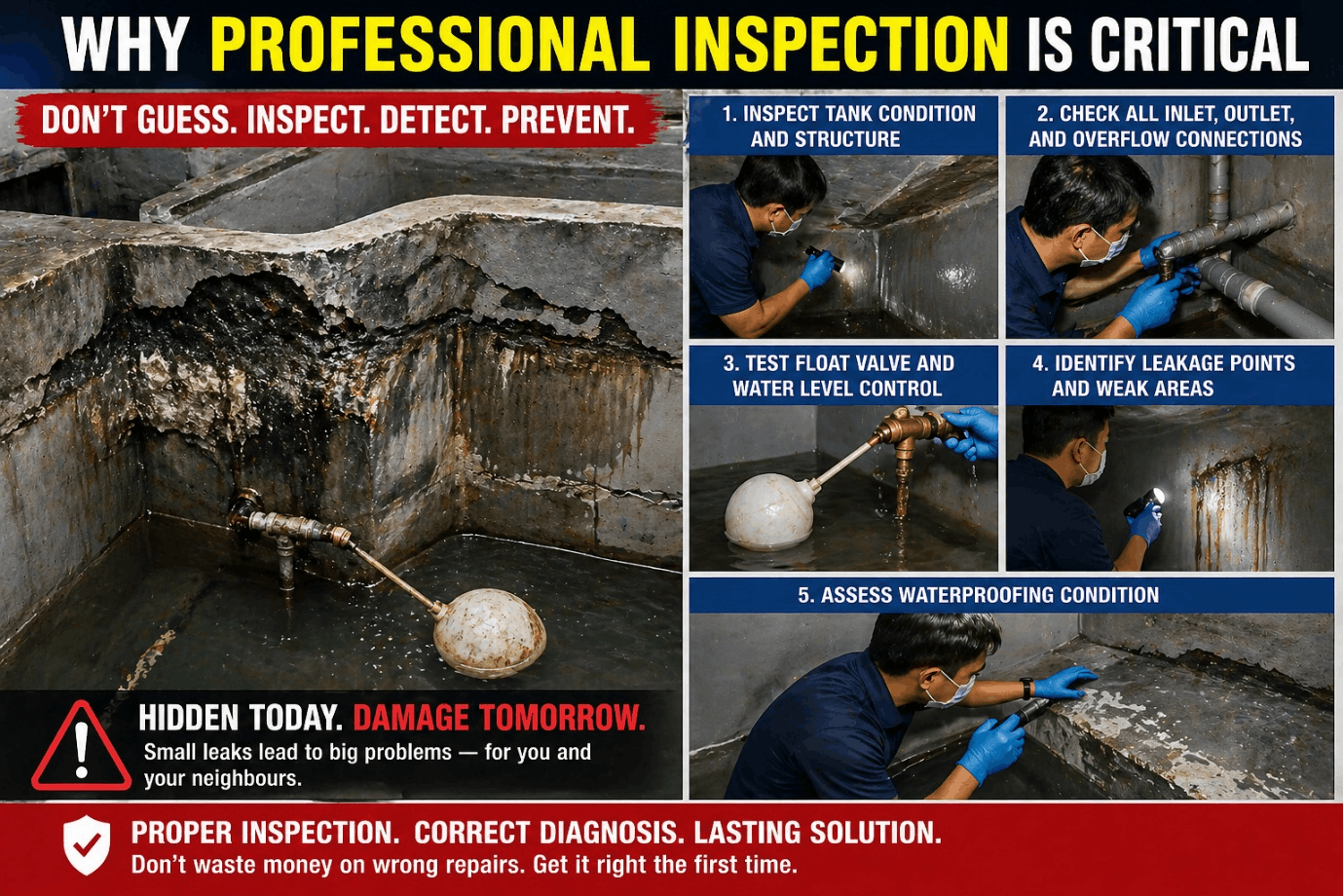
🛠️ Why Professional Inspection Is Critical
Water tank systems are not fully visible, and guessing the problem can lead to incorrect repairs. A professional inspection ensures the root cause is identified and properly fixed.
A trained technician will:
- Inspect tank condition and structure
- Check all inlet, outlet, and overflow connections
- Test float valve and water level control
- Identify leakage points and weak areas
- Assess waterproofing condition
Without proper inspection, repairs may only solve the symptom—not the actual problem.
🔧 Common Solutions for Tank Leakage
Depending on the severity of the issue, different solutions may be required:
Minor Leak Repairs
- Application of waterproof sealant or epoxy
- Tightening or replacing fittings
- Adjusting float valve settings
Moderate Repairs
- Replacing damaged pipes or valves
- Reinforcing weak tank areas
- Reapplying waterproofing layers
Major Repairs
- Partial or full tank replacement
- Structural repair of tank base
- Complete waterproofing system upgrade
Each situation is different, which is why proper assessment is essential before starting any work.
🏢 Condo Living Means Shared Responsibility
In condominiums, your plumbing system is not isolated. What happens in your unit can directly impact others.
That’s why early action is not just about protecting your property—it’s about:
- Maintaining good relationships with neighbours
- Avoiding disputes and complaints
- Ensuring overall building safety
Ignoring a leak can quickly turn into a bigger issue involving management and multiple parties.
✅ Prevention Is Always Better Than Repair
The good news is that most tank leakage problems are preventable with regular maintenance.
Here’s what you can do:
- Schedule periodic tank inspections
- Check for visible signs of wear and tear
- Ensure float valve is working properly
- Monitor water usage and pump activity
- Engage professionals for maintenance
A small investment in maintenance can save you from major repair costs later.
🚨 Don’t Wait Until It Becomes a Crisis
One of the biggest mistakes property owners make is waiting until visible damage appears. By then, the problem has already spread.
Tank leaks are silent, slow, and destructive. They don’t create immediate noise—but they cause long-term damage behind the scenes.
Taking action early can prevent:
- Structural damage
- Costly repairs
- Safety risks
- Neighbour disputes
📞 Need Professional Help?
Alpha & Omega Trinity Pte Ltd
Professional Plumbing, Aircon & Water System Specialist in Singapore
📲 Call / WhatsApp: +65 8151 8857
🌐 www.aotrinitysg.com.com


