
“Your Water Tank Could Be Polluting Entire Booster Pump System”
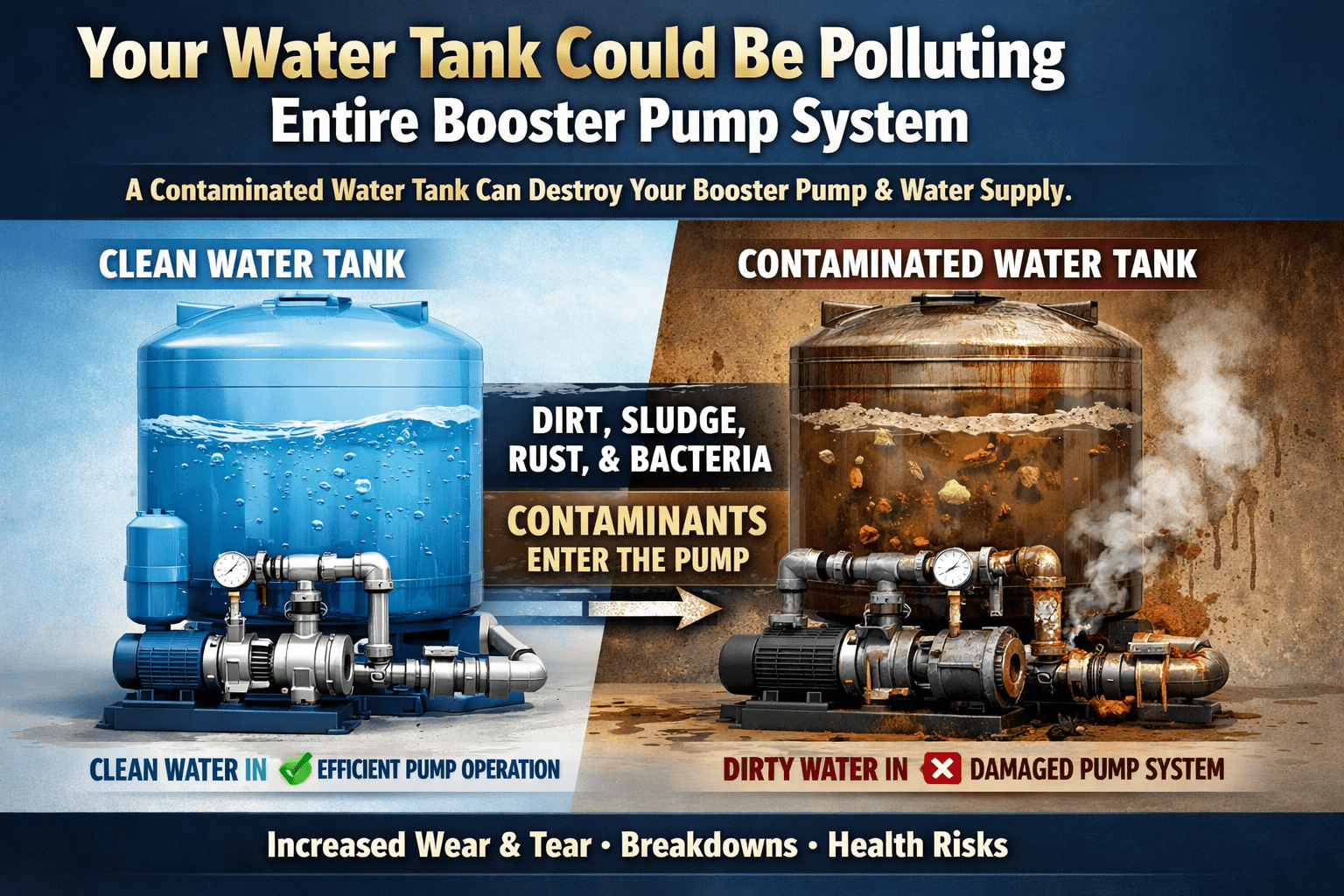
Most building owners, facility managers, and even homeowners assume that when water pressure drops or a booster pump starts failing, the problem lies within the pump itself. In reality, one of the most overlooked and dangerous sources of booster pump problems is a contaminated water tank.
A poorly maintained water tank does not just affect water quality—it can silently damage the entire booster pump system, leading to frequent breakdowns, costly repairs, and even health risks. Understanding this connection is essential for preventing long-term damage and ensuring a reliable water supply.
How Water Tanks and Booster Pumps Are Connected
The water tank is the first point of supply for the booster pump. Whatever enters or accumulates inside the tank is eventually pulled into the pump system. If the tank is clean, the pump receives clean water and operates efficiently. If the tank is dirty, the pump becomes the first victim.
Booster pumps are designed to increase pressure, not to filter contaminated water. When dirt, sludge, rust, or biological growth enters the pump, it stresses internal components far beyond their intended design.
What Builds Up Inside an Unmaintained Water Tank
Over time, even tanks connected to treated municipal water can accumulate contaminants:
- Sediment and Sludge
Fine sand, silt, and debris settle at the bottom of the tank. When water demand increases, these particles are drawn into the suction line and sent directly to the pump. - Rust and Corrosion Particles
Metal tanks, fittings, and internal components can corrode, releasing rust flakes into the system. These particles act like abrasive material inside valves and pump impellers. - Algae and Bacterial Growth
Warm, stagnant water combined with sunlight exposure can encourage algae growth. In extreme cases, biofilm forms on tank walls and piping, contaminating the water supply. - Foreign Debris
Broken float parts, rubber fragments, insects, or dust entering through unsealed vents or overflows often end up inside the tank.
How Tank Contamination Damages Booster Pump Systems
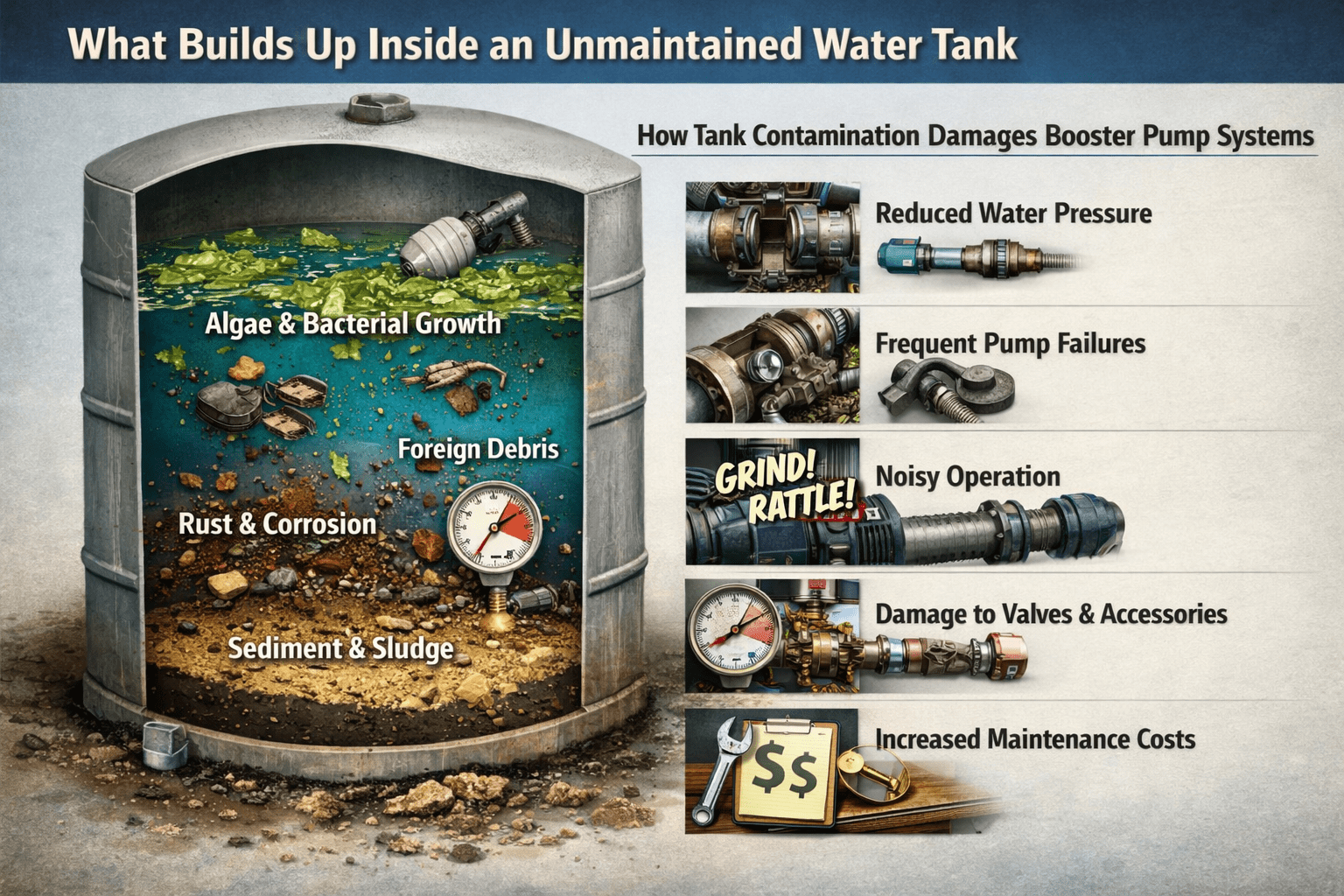
Once contaminants enter the booster pump system, several problems begin to appear:
Reduced Water Pressure
Clogged suction strainers and partially blocked pipes restrict flow, forcing the pump to work harder just to maintain pressure.
Frequent Pump Failures
Sediment and debris damage impellers, seals, and bearings. This leads to overheating, vibration, and premature motor failure.
Noisy Operation
Grinding sounds, cavitation noise, and excessive vibration are common signs of debris entering the pump.
Damage to Valves and Accessories
Pressure reducing valves (PRVs), non-return valves (NRVs), pressure gauges, and flow sensors are highly sensitive to dirt. Contaminants cause inaccurate readings and malfunction.
Increased Maintenance and Replacement Costs
Replacing a booster pump is far more expensive than maintaining a water tank. Neglect shifts costs from prevention to emergency repairs.
The Hidden Risk: Health and Hygiene
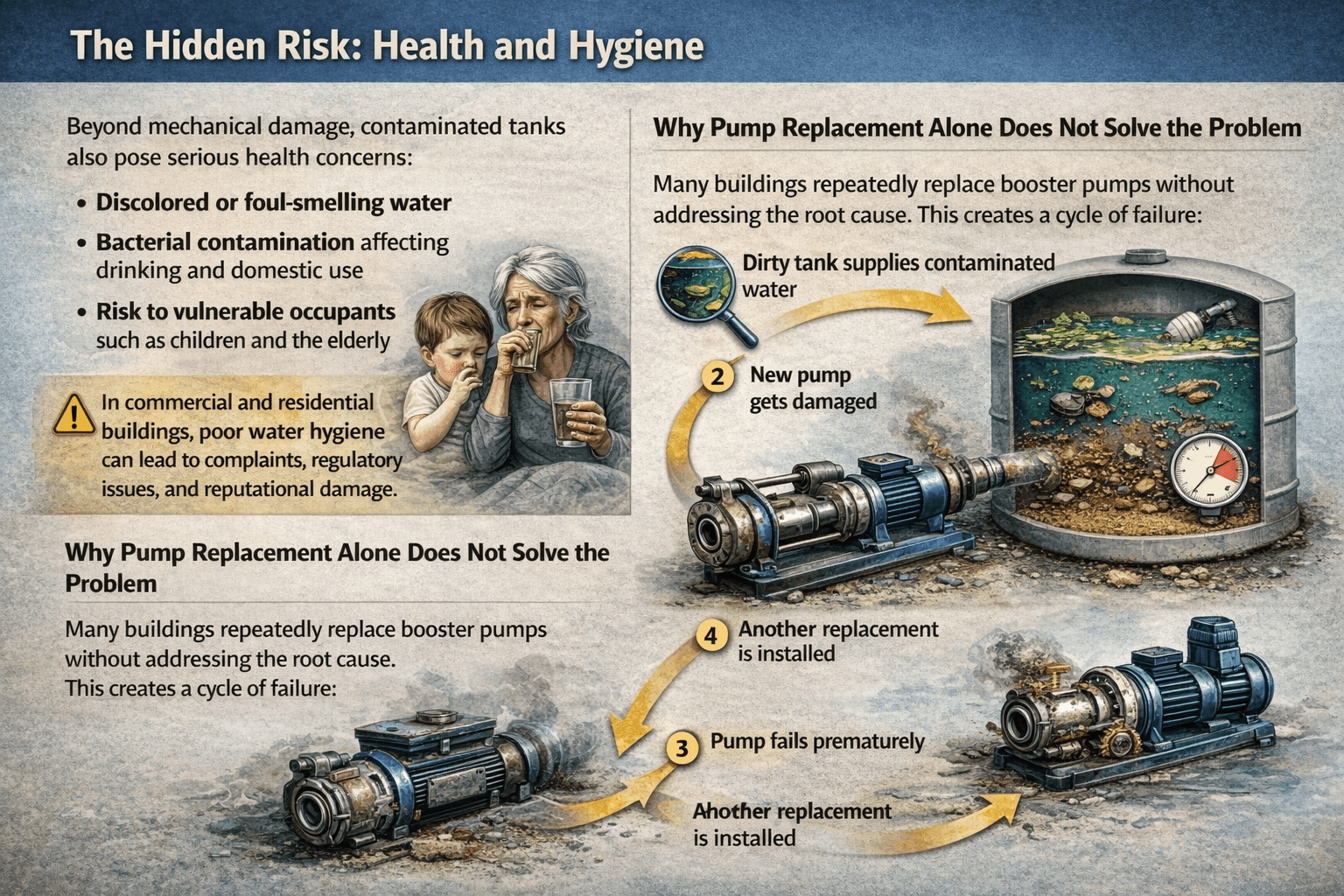
Beyond mechanical damage, contaminated tanks also pose serious health concerns:
- Discolored or foul-smelling water
- Bacterial contamination affecting drinking and domestic use
- Risk to vulnerable occupants such as children and the elderly
In commercial and residential buildings, poor water hygiene can lead to complaints, regulatory issues, and reputational damage.
Why Pump Replacement Alone Does Not Solve the Problem
Many buildings repeatedly replace booster pumps without addressing the root cause. This creates a cycle of failure:
- Dirty tank supplies contaminated water
- New pump gets damaged
- Pump fails prematurely
- Another replacement is installed
- Problem repeats
Without cleaning and inspecting the tank, even a brand-new pump will fail early.
What Should Be Done to Prevent System-Wide Damage
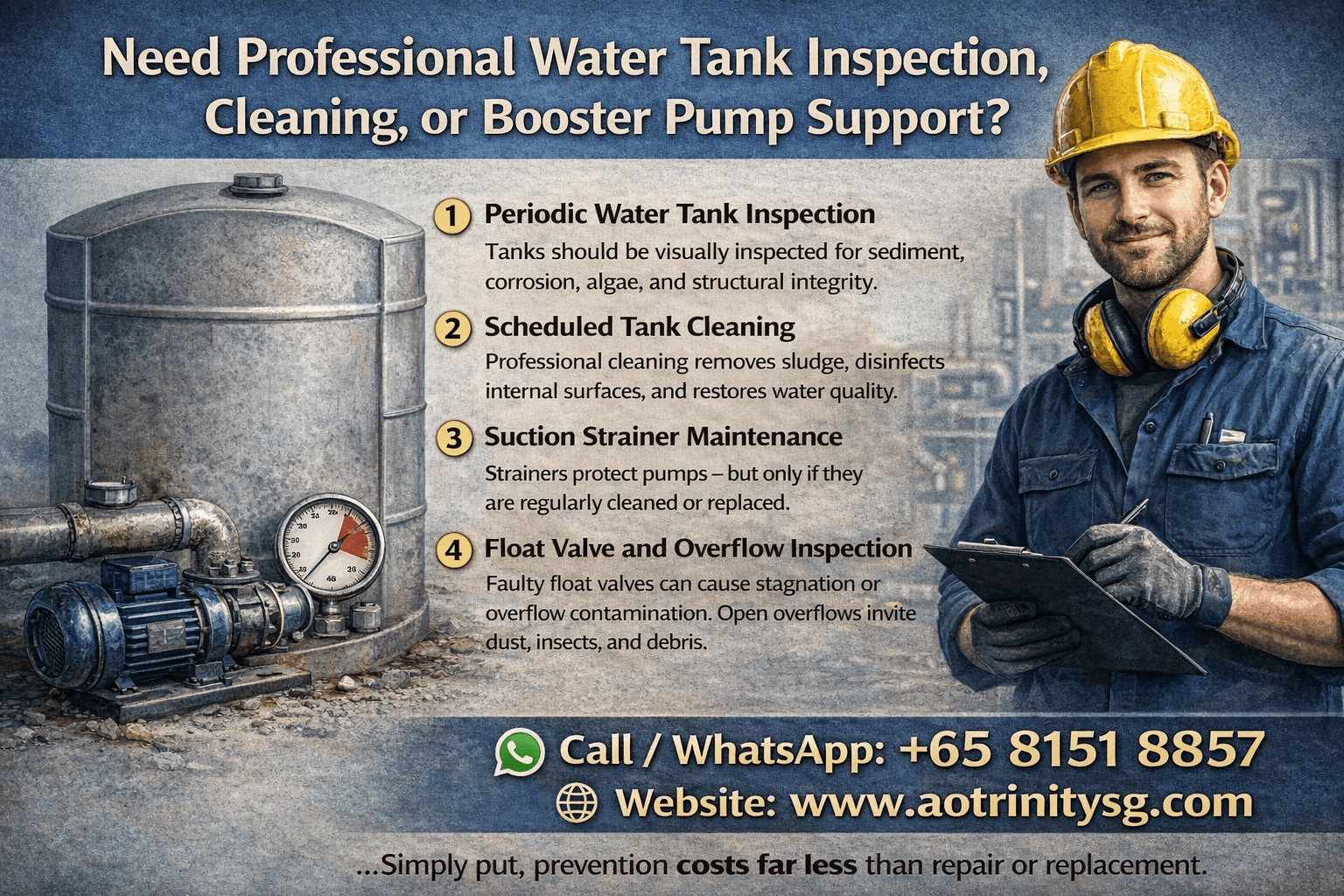
- Periodic Water Tank Inspection
Tanks should be visually inspected for sediment, corrosion, algae, and structural integrity. - Scheduled Tank Cleaning
Professional cleaning removes sludge, disinfects internal surfaces, and restores water quality. - Suction Strainer Maintenance
Strainers protect pumps—but only if they are regularly cleaned or replaced. - Float Valve and Overflow Inspection
Faulty float valves can cause stagnation or overflow contamination. Open overflows invite dust, insects, and debris. - Hygiene and Sealing Checks
Covers, vents, and access points must be properly sealed to prevent external contamination.
Preventive Maintenance Is Always Cheaper
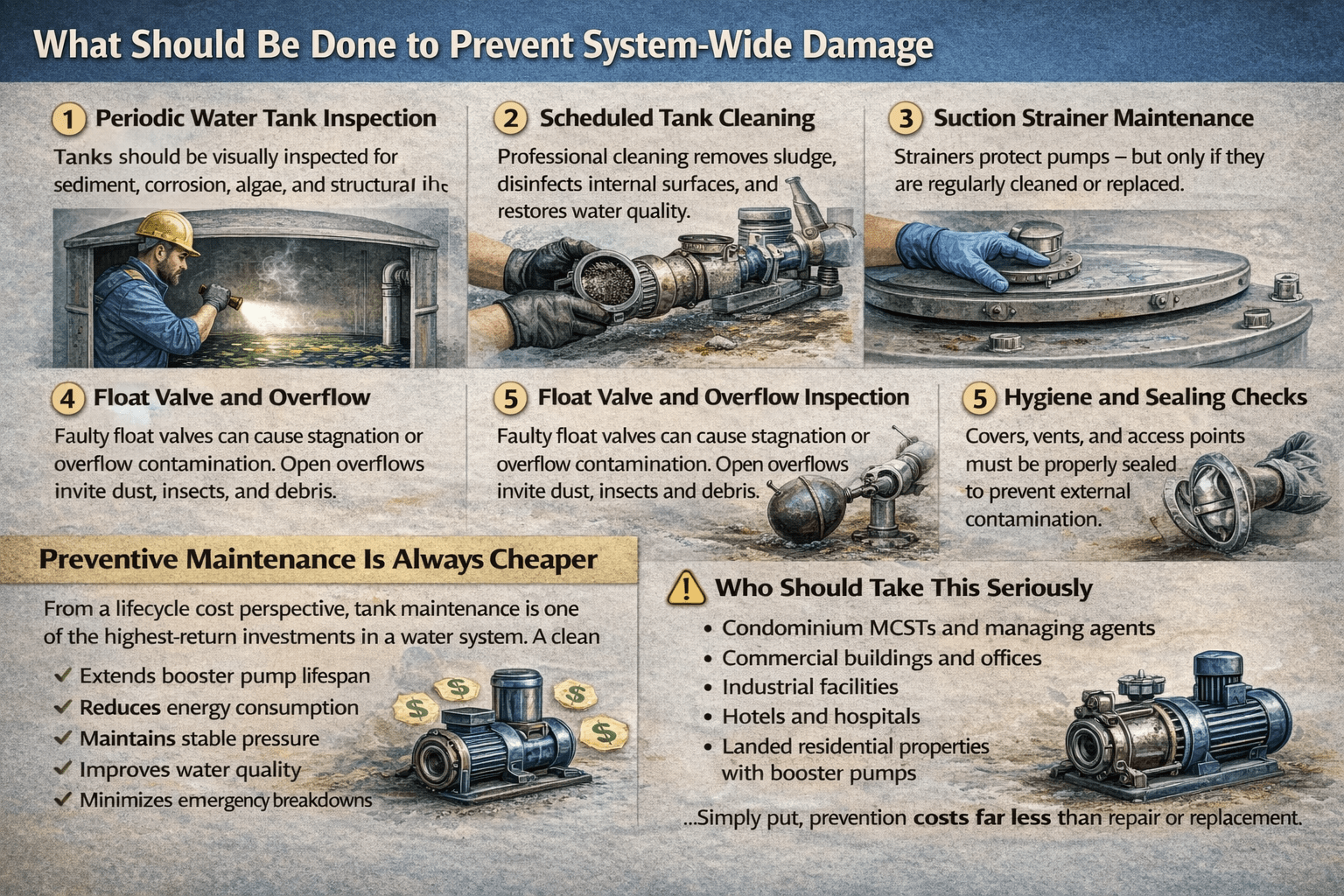
From a lifecycle cost perspective, tank maintenance is one of the highest-return investments in a water system. A clean tank:
- Extends booster pump lifespan
- Reduces energy consumption
- Maintains stable pressure
- Improves water quality
- Minimizes emergency breakdowns
Simply put, prevention costs far less than repair or replacement.
Who Should Take This Seriously
- Condominium MCSTs and managing agents
- Commercial buildings and offices
- Industrial facilities
- Hotels and hospitals
- Landed residential properties with booster pumps
Any property using a water tank and booster pump system is exposed to this risk if maintenance is ignored.
Final Thought
Your booster pump may be failing, but the real problem could be upstream. A contaminated water tank quietly affects pressure, performance, hygiene, and system reliability. Addressing the tank condition is not optional—it is essential for the health of the entire water supply system.
If you protect your tank, you protect your pump.
If you ignore the tank, the pump will eventually fail.
Need Professional Water Tank Inspection, Cleaning, or Booster Pump Support?
📞 Call / WhatsApp: +65 8151 8857
🌐 Website: www.aotrinitysg.com.com


